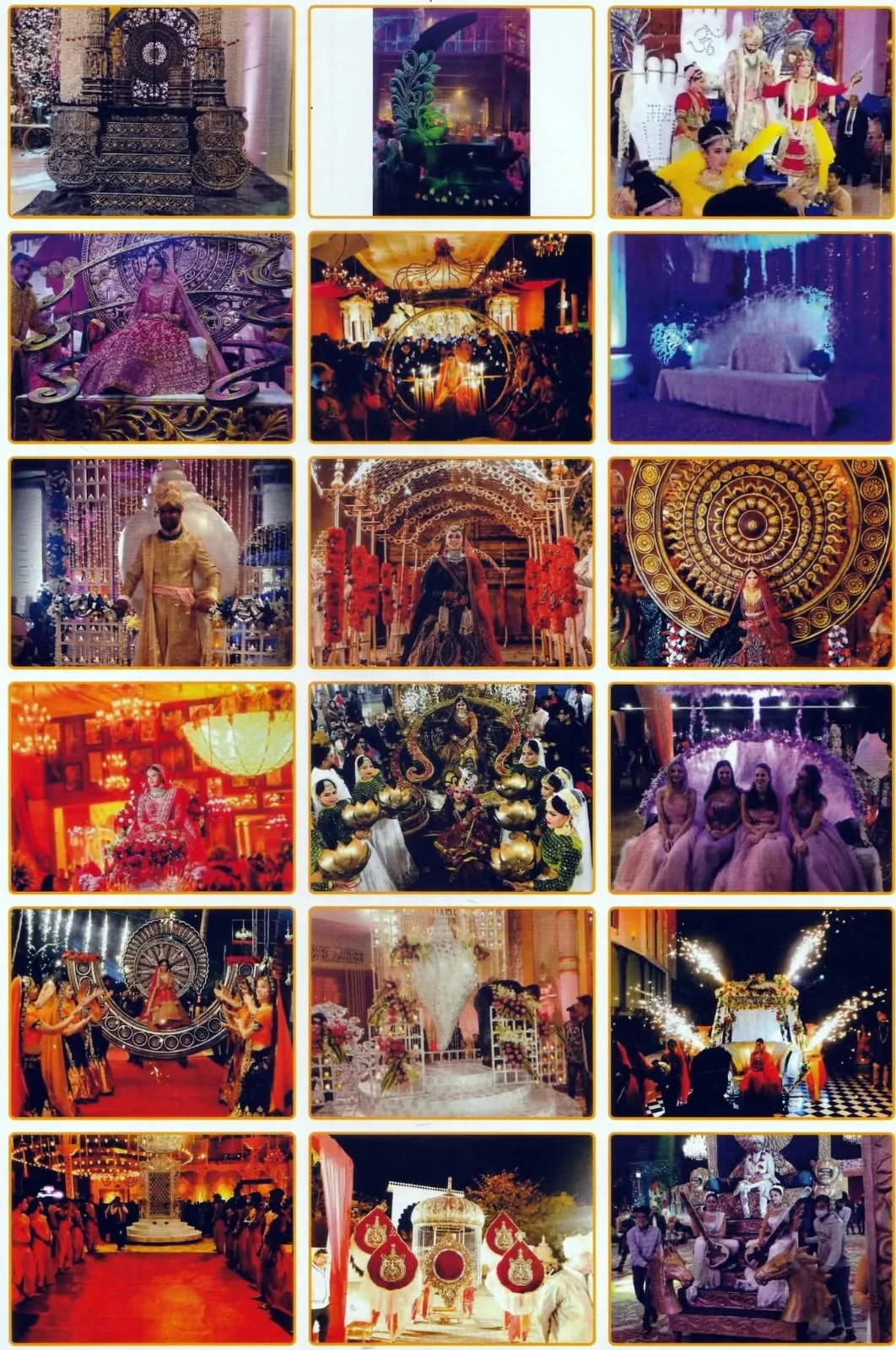
Couples usually arrive at the entry conversation with a video saved on their phone. That is a good starting point — but the concept in the video was built for a specific venue, and yours is different. Matching ambition to the actual space is what separates an entry that works from one that disappoints.
Start with four measurements
Aisle length. This determines how long the entry lasts. A forty-foot walkway gives roughly thirty seconds of walking — enough for one musical build. An eighty-foot approach allows a proper sequence with a change of pace.
Ceiling height. Indoor venues with low ceilings rule out lifted platforms and tall props, and restrict any effect that needs headroom. Cold pyro in particular needs clearance and permission.
Entry point width. A palki with four carriers needs genuine width. So does a formation of eight welcome dancers. Measure the actual doorway or gate, not the corridor leading to it.
Power availability. LED costumes, effect machines and lighting all draw power. Older venues frequently cannot supply what a large entry needs without a generator.
Match the concept to the constraint
For low ceilings, work horizontally instead of vertically — floor-level effects, aisle-lining performers, ground-level fog. For short aisles, concentrate on a single strong moment at the threshold rather than a sequence. For outdoor venues with generous space, longer sequences with multiple stages genuinely pay off.
Do not neglect safety
Any effect involving flame, spark or pyrotechnics requires venue permission and, in many NCR locations, local clearance. Cold pyro is far safer than traditional pyrotechnics but still needs clearance from fabric, drapes and low ceilings. A vendor who dismisses this concern is one to avoid.
Rehearse it
Every entry we produce is walked through beforehand with everyone involved — the couple, the family members participating, the dhol players, the effects operator and the sound engineer. It takes twenty minutes and it is the difference between a cued sequence and a confused one.
Finally, consider the photographs
Talk to your photographer while the entry is being designed, not on the day. They will tell you where they need to stand, what lighting they need, and whether a particular effect will obscure the shot. An entry that looks spectacular in the room but produces unusable photographs has not really succeeded.